
MAZDA AND HOMO FABER - A SHARED PASSION FOR CRAFTSMANSHIP
Petit-Lancy, 02.07.2026
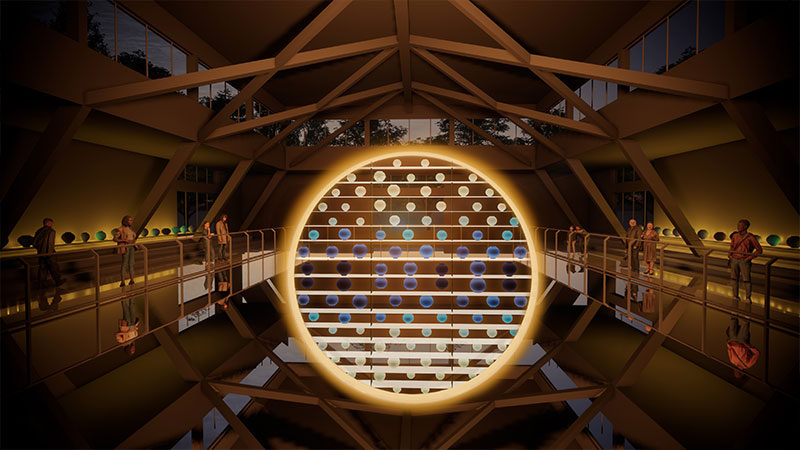
Piscina Gandini, Homo Faber 2026 ©Es Devlin
- Exploring the fundamental relationship between light, materials and the human hand, Mazda presents participatory workshops in hanko and kintsugi
- Visitors will discover Mazda design and crafted objects alongside live craft experiences inspired by Japanese traditions
- The exhibition includes works from Mazda-supported collaborations with the Homo Faber Fellowship and ECAL
This September, Mazda returns to Venice for Homo Faber 2026: An Island of Light, bringing its distinctive spirit of Japanese craftsmanship to one of the world’s most inspiring celebrations of contemporary making. Organised by the Michelangelo Foundation for Creativity and Craftsmanship, the event takes place from 1 to 30 September 2026 in Venice, Italy.
Following its debut at Homo Faber 2024 and its role as Country Sponsor for Japan for international craft training programme Homo Faber Fellowship, Mazda will deepen its presence this year with a richer programme of hands-on craft experiences.
Set on San Giorgio Maggiore Island at the Fondazione Giorgio Cini, Homo Faber 2026 invites visitors to explore the theme of “An Island of Light” through exhibitions, workshops and immersive encounters that reveal the beauty of skill, material and human touch.
A central part of Mazda's involvement at Homo Faber 2026 will be to present two participatory workshops inspired by traditional Japanese crafts. Guided by artisans from the Homo Faber community, the workshops give visitors the chance to learn traditional techniques and create their own keepsake. In the kintsugi workshop, participants will learn the centuries-old art of repairing broken ceramics with gold, celebrating the beauty of imperfection. The hanko workshop introduces visitors to the art of seal carving, guiding them to engrave a wooden stamp featuring one kanji character.
Alongside the workshops, Mazda will invite visitors to take part in a shared origami experience led by a master artist. Throughout September, guests can fold delicate white paper flowers, each one added to a growing installation that slowly transforms into a collective artwork.
A curated display of craftsmanship and design objects will offer insights into the creative principles behind Mazda's approach to design. Jo Stenuit, Director of Mazda European Design, comments: "The objects presented by Mazda at Homo Faber 2026 reveal the same curiosity that drives our design process: a fascination with materials, making and the human hand. Light shapes how we perceive form, texture, and space. For us, craftsmanship is not a category — it is a way of thinking, and one of the many ways we express what it means to Craft with Japanese soul."
From Fellowship to Biennial
A special highlight of Mazda’s participation is the presence of Kuniko Maeda, one of the master artisans supported by Mazda through the 2025/26 Homo Faber Fellowship. From 22 to 25 September, visitors will have the opportunity to experience her craft firsthand through live demonstrations. They will also discover Liminal, the piece she developed with her fellow Momoka Ienaga. Selected to be exhibited at Homo Faber 2026, this silk artwork explores how two creative perspectives converge, drawing inspiration from the way organic forms adapt during periods of transition.
Changing light and the beauty of intentional movement by ECAL student Julianna Probst
The exhibition space will also feature additional works supported by Mazda, including naturally dyed textile pieces by Fellowship master artisan Harumi Sugiura, alongside Zephyr, a project by American student Julianna Probst developed as part of Mazda Switzerland’s collaboration with the University of Art and Design ECAL (École cantonale d’art de Lausanne).
Zephyr is a kinetic sculpture that embodies Mazda’s design philosophy - movement, elegance, and intention. Through a sophisticated interplay of light and material, the work highlights the brand’s colors, materials, and finishes, integrating traditional Japanese techniques, including Urushi lacquer.
Combining glass, aluminum, steel, silk, and automotive paint, the piece captures and refracts light to evoke a sense of continuous motion, drawing inspiration from the Japanese art of ikebana (flower arrangement).
Set on a cork base as a subtle reference to Mazda’s origins, it blends tradition with modern design. Overall, Zephyr showcases Mazda’s distinctive Nightfall Violet, while emphasizing purity of form and the brand’s refined elegance.
Presented at the Homo Faber Biennial, these works underscore Mazda’s commitment to supporting both master artisans and the next generation of creative talent.
For Katarina Loksa, Head of Brand at Mazda Motor Europe, “Craftsmanship is about preserving skills by helping them to evolve for future generations. Seeing the work of Kuniko Maeda and Momoka Ienaga exhibited at Homo Faber 2026 is a wonderful example of how knowledge can be shared and carried forward. We are proud to continue our partnership with the Michelangelo Foundation and to contribute experiences that allow visitors to engage with the spirit of making.”
From Homo Faber 2024 to Homo Faber Fellowship and now Homo Faber 2026, Mazda’s collaboration with the Michelangelo Foundation reflects a shared belief in craftsmanship as a living discipline.